Products

Products
By Tachungho Editorial Team
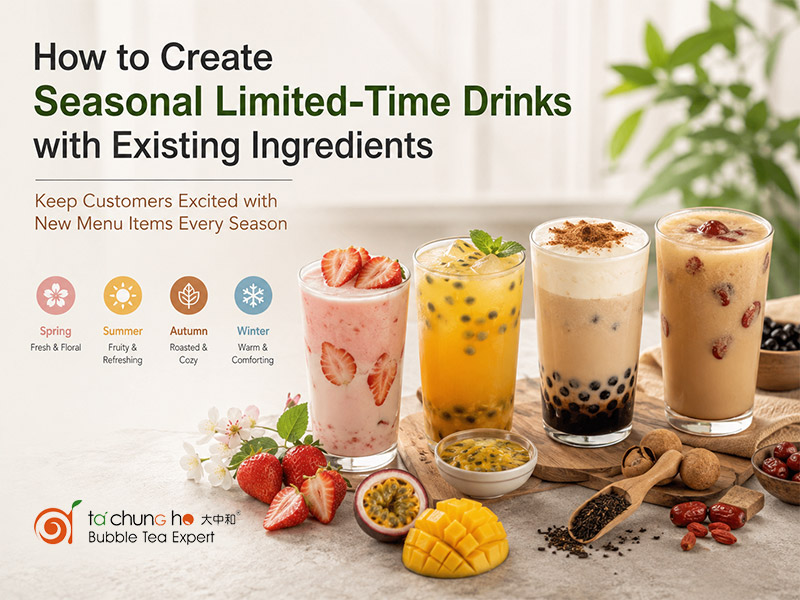
In the highly competitive bubble tea market, keeping your menu fresh is essential.
Many tea shop owners face the same challenge:
"How can we launch new products without constantly adding new ingredients and increasing inventory costs?"
The good news is that creating seasonal limited-time drinks doesn't always require sourcing brand-new ingredients. In many cases, successful seasonal beverages are developed by creatively combining ingredients already available in your store.
A well-designed seasonal menu can help attract new customers, encourage repeat visits, and create social media buzz throughout the year.
Consumers today are looking for more than just a refreshing beverage.
They are looking for experiences, trends, and products that match the current season.
When a drink reflects seasonal flavors and emotions, it naturally becomes more appealing.
For example:
These seasonal associations help create an emotional connection with consumers and increase purchase intent.
One common misconception is that product innovation requires continuously adding new ingredients.
In reality, introducing too many ingredients can increase operational complexity, storage requirements, and inventory waste.
Instead, many successful beverage brands focus on maximizing the versatility of their existing ingredients.
Common ingredients such as:
can be combined in different ways to create entirely new seasonal beverages.
This approach helps reduce costs while maintaining menu innovation.
Spring is the perfect season for light, colorful, and refreshing beverages.
Popular flavor combinations include:
Drinks with vibrant colors and layered presentations also perform well on social media, helping increase organic brand exposure.
Summer is traditionally the strongest season for cold beverage sales.
Consumers often seek refreshing and fruity options to beat the heat.
Popular seasonal creations include:
Adding toppings such as popping boba, crystal pearls, or fruit chunks can further enhance texture and visual appeal.
As temperatures begin to cool, consumers gravitate toward deeper and more comforting flavors.
Roasted tea varieties such as Hojicha have gained significant popularity in recent years due to their unique aroma and smooth taste.
Popular autumn-inspired beverages include:
These beverages help create a premium seasonal experience while differentiating your menu from competitors.
During winter, warm beverages become increasingly popular.
Consumers often associate ingredients such as brown sugar, longan, red dates, and ginger with comfort and warmth.
Popular winter drinks include:
Offering these beverages as limited-time seasonal specials can help increase customer engagement and create a sense of urgency.
The true value of seasonal beverages goes beyond immediate sales.
They give customers a reason to return and see what's new.
When customers begin asking:
"What's the next seasonal drink?"
or
"Is that limited-edition drink coming back this year?"
your brand has successfully built anticipation and loyalty.
This anticipation often translates into stronger customer retention and increased word-of-mouth marketing.
Creating seasonal beverages doesn't necessarily require a large investment in new ingredients.
By utilizing existing tea leaves, syrups, fruit concentrates, powders, and toppings creatively, beverage businesses can develop exciting seasonal offerings that attract customers and strengthen brand identity.
Rather than constantly chasing trends, focus on maximizing the potential of your existing ingredients.
When customers look forward to your seasonal menu every year, you've created something far more valuable than a single successful drink—you've built lasting brand loyalty.
Related Articles